
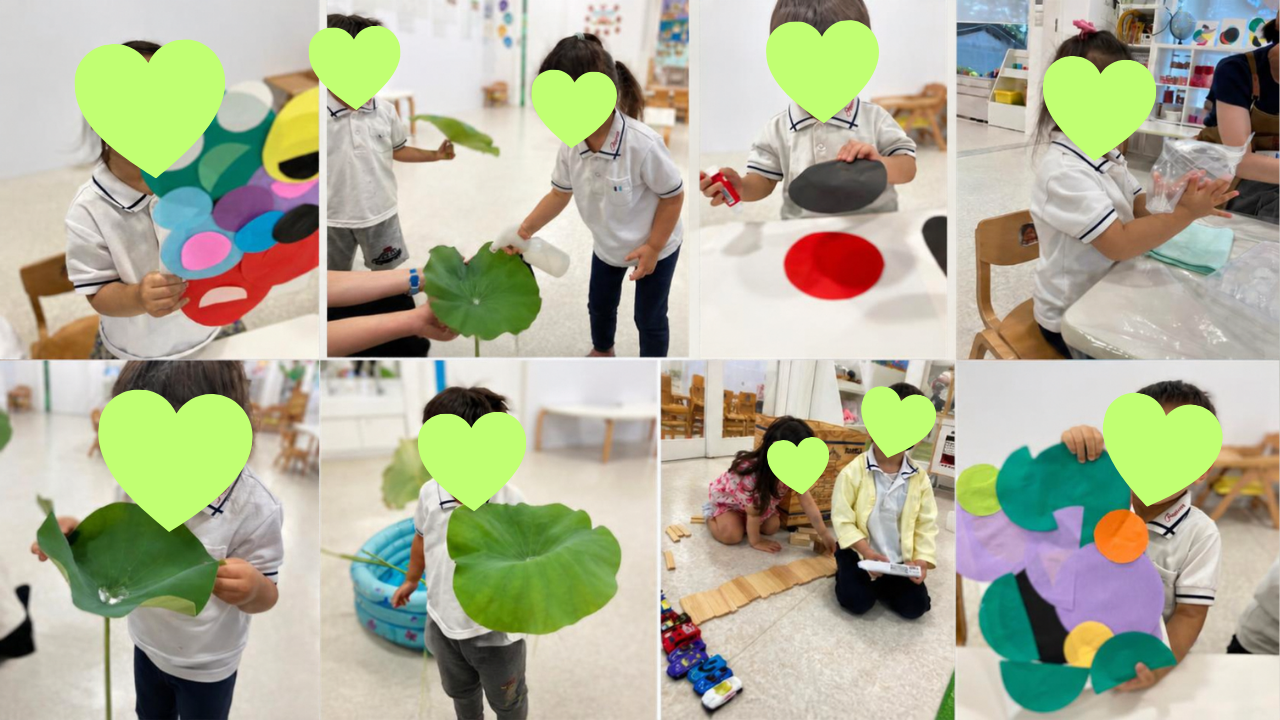
“Can I hold it?”
“Yes!”
“Can I spray it?”
“Yes!”
“Can I have more?”
“Yes!”
At our school, we believe some of the best learning begins with a simple question.
Our approach is inspired by the Early Years Foundation Stage (EYFS), encouraging children to be curious, independent and active participants in their learning. When children ask questions, we give them the space to explore the answers for themselves.
🧊 “Can I hold the ice?”
While exploring water, our students asked if they could hold the ice.
“Yes!”
They felt that it was hard and cold and watched as it slowly melted into water. Instead of simply being told about changes in water, they experienced the change themselves.
🌸 “Can I spray the lotus?”
While studying lotus plants, a student asked if they could spray water onto the leaf.
“Yes!”
The children watched the water form droplets and roll across the surface. They discovered how the lotus leaf repels water.
A simple question became an opportunity to investigate.
🎨 “Can I have more?”
During art, our students asked for more circles.
“Yes!”
With the freedom to choose, they created their own ideas. Circles became faces, while large dark circles became “stormy” skies.
There was no single right answer. Each child could use the materials in their own way.
🧸 “Can I use this?”
Even during play, children are encouraged to experiment. Toys do not always need to be used in the way they were originally intended.
A toy can become a car, a house, a character or part of an entirely new imaginary world.
When we give children the freedom to explore, they often surprise us with what they discover.
🌟 Sometimes, “Yes” Is Where Learning Begins
When we say yes, we give children the opportunity to wonder, experiment, create and discover.
We may know what an activity is designed to explore, but the children’s ideas can take the learning somewhere completely unexpected.
“Can I?”
“Yes.”
What will they discover next? 🌈
🌱 「いいよ」と言うとどうなる? 🌱
「これ、持ってもいい?」
「いいよ!」
「これ、スプレーしてもいい?」
「いいよ!」
「もっともらってもいい?」
「いいよ!」
最高の学びは、こうしたシンプルな質問から始まるものだと考えています。
私たちのアプローチは「早期教育基礎段階(EYFS)」にインスピレーションを得ており、お子様たちが好奇心を持ち、自立し、学習に主体的に参加できるよう促しています。
お子様たちが質問をしたときは、自分たちで答えを探求できる余地を与えています。
🧊 「氷を触ってもいい?」
水について探求している最中、お子様たちが氷を触ってもいいかと尋ねました。
「いいよ!」
お子様たちは、氷が硬くて冷たいことを感じ、それがゆっくりと水に溶けていく様子をじっと見守りました。
水の変化について単に説明されるのではなく、お子様たちはその変化を自らの体験として感じ取ることができました。
🌸 「ハスの葉に水を吹きかけてもいい?」
ハスの植物を観察している際、あるお子様が葉に水を吹きかけてもいいかと尋ねました。
「いいよ!」
お子様たちは、水が水滴となって葉の表面を転がっていく様子をじっと見守りました。
そして、ハスの葉が水をはじく仕組みを発見したのです。
たった一つのシンプルな質問が、探究のきっかけとなりました。
🎨 「もっともらってもいい?」
アートの授業中、お子様たちは「もっと丸い紙が欲しい」と頼んできました。
「いいよ!」
自由に選べる環境の中で、お子様たちは自分なりのアイデアを形にしました。
丸い紙は顔になり、大きくて濃い色の丸は嵐の空になりました。
正解は一つだけではありません。
お子様たちはそれぞれ、自分なりの方法で材料を使うことができました。
🧸 「これを使ってもいい?」
遊びの時間でも、お子様たちは試行錯誤するよう促されています。
おもちゃは、必ずしも本来の用途通りに使う必要はありません。
おもちゃは車にも、家にも、キャラクターにも、あるいはまったく新しい想像の世界の一部にもなり得ます。
お子様たちに探求の自由を与えると、彼らが発見したことに、私たち大人もしばしば驚かされます。
🌟 時には、「いいよ」という言葉が学びの始まりになる
「いいよ」と言うことで、私たちはお子様たちに、不思議に思い、試行錯誤し、創造し、発見する機会を与えています。
その活動が何を探求するために設計されたかは私たちに分かっていても、お子さまたちのアイデアによって、学びはまったく予期せぬ方向へと進むことがあります。
「これ、使ってもいい?」
「いいよ。」
次は何を発見するのでしょうか? 🌈